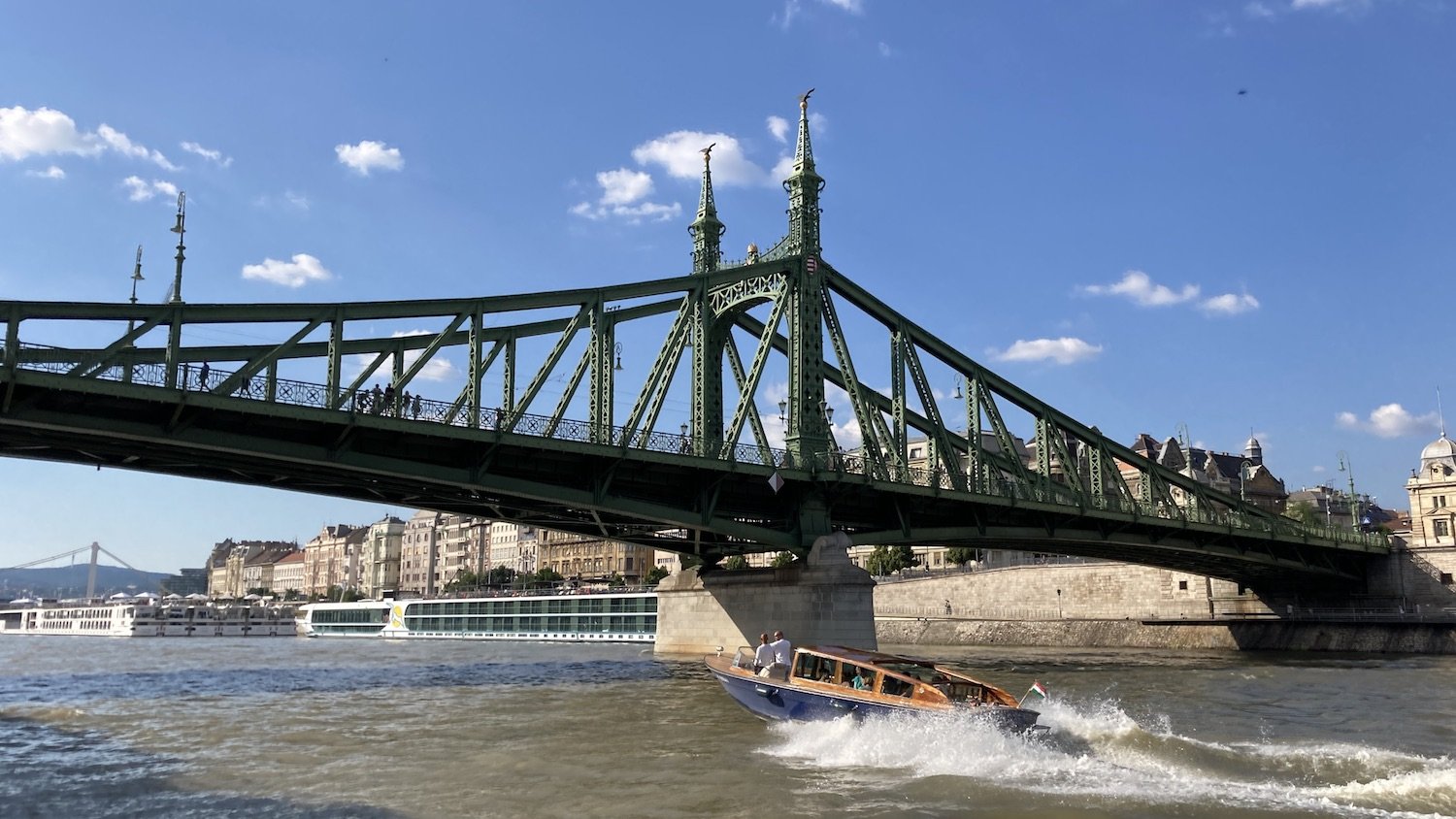
Entering Budapest by water.
The Last Day: A Roman Farewell in Budapest
We said goodbye to the crew of the AmaVerde and stepped onto the dock at Budapest. This was the final stop of our journey along the “Romantic Danube.” We had traveled some 500 miles—roughly one-third of this magnificent river’s run—floating through the beautiful swaths of Germany, Austria, and Slovakia.
Now, we were down to the final 24 hours. Vicki was preparing to return home, while I was set to continue toward my summer work in Israel/Palestine. I was finally out of quarantine, but feeling morose; Vicki, as always, was her ebullient self.
“I hate the last day of a vacation,” I muttered.
“Come on,” she chided. “If every day was a vacation, it wouldn’t be a vacation.”
The Monday Challenge
We had one free day left. That was the good news. The bad news? It was a Monday.
In Budapest, Mondays mean museum doors are locked. This included the Aquincum Museum, a significant blow to my archaeological heart. The excavations of the Roman ruins of Contra-Aquincum are spectacular enough to be nicknamed “the Hungarian Pompeii.” Since Budapest isn’t exactly a place you just "swing by" on a whim, the closure was a real bummer.
We consoled ourselves with food. After a week of navigating unrecognizable cuisine with unpronounceable names, we headed to Bamba Marha Burger Bar. They promised “the best burger in the city,” and they may have been right. Between the "Bamba Burger" and a side of fries, my spirits began to lift.
While scrolling through my phone mid-meal, I made a discovery: more Roman remains were nearby. The foundations of a fort sat just downstream from us on the Pest side of the Danube. (We had learned that "Budapest" is a compound name: Buda is the hilly side of the river, and Pest is the flat side).
The site, located in Március 15 tér (March 15 Square) at the base of the modern Elisabeth Bridge, was open to the public 24/7. We set out on foot.

The ruins were hidden beneath concrete pavers and opaque glass.
Discoveries at Március 15 Tér
Finding the site was the easy part; appreciating it was the challenge. The remains were sheltered by concrete pavers and panes of opaque plexiglass, clouded with age. Without onsite maps or signage, the walls were a jumble.

A little digital enhancement revealed monumental walls under the plexiglass.
It was only later that I found an aerial view to make sense of it. I’ve doctored the photograph below so you can see the fort (in red) superimposed over the modern features of the plaza. This original Roman fortress—likely built at the end of the third century AD—was a square of roughly 86 by 84 meters with regular towers. It served as a vital control point in the Danubian Limes, the empire's frontier line.
It may have been called Castellum Contra Tautiaci. or “Fortress opposite the Teutanus stream.”

Ádám Németh’s virtual reconstruction of Castellum contra Teutanum. See the website here: https://budapestlocal.com/budapest-through-centuries-roman-empire (accessed 6/16/2022).
Had the museum been open, we would have seen its treasures, including a magnificent helmet believed to belong to a high-ranking officer stationed right where we stood.
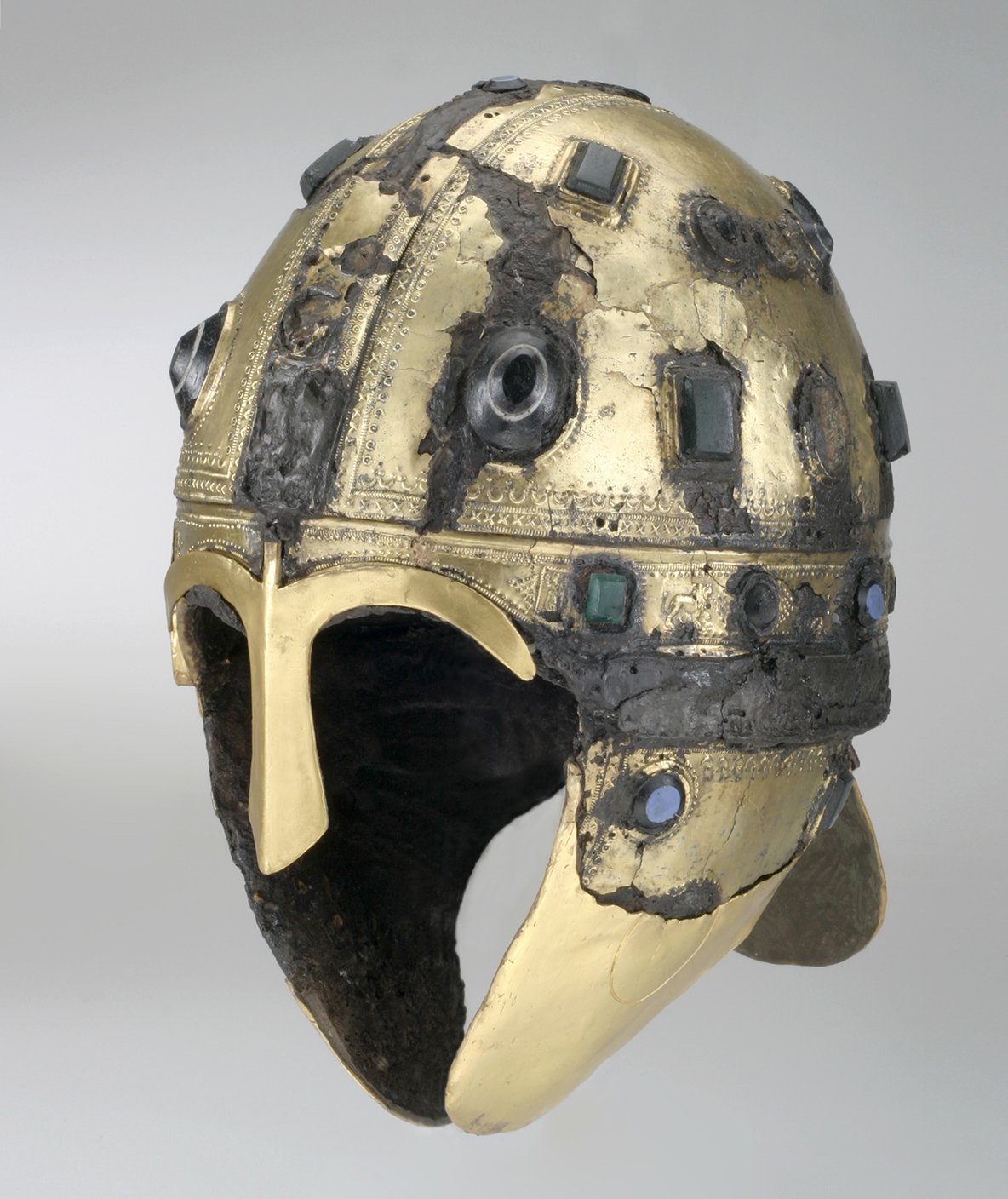
Helmet discovered in 1898 among the Roman remains from Castellum contra Teutanum. It is a “Ridge Helmet” of the Berkasovo type. Image from here: https://seuso.mnm.hu/en/the-seuso-treasuer/chronology/helmet-march-15-squere-budapest-castellum-contra-teutanum (accessed 6/17/2022).
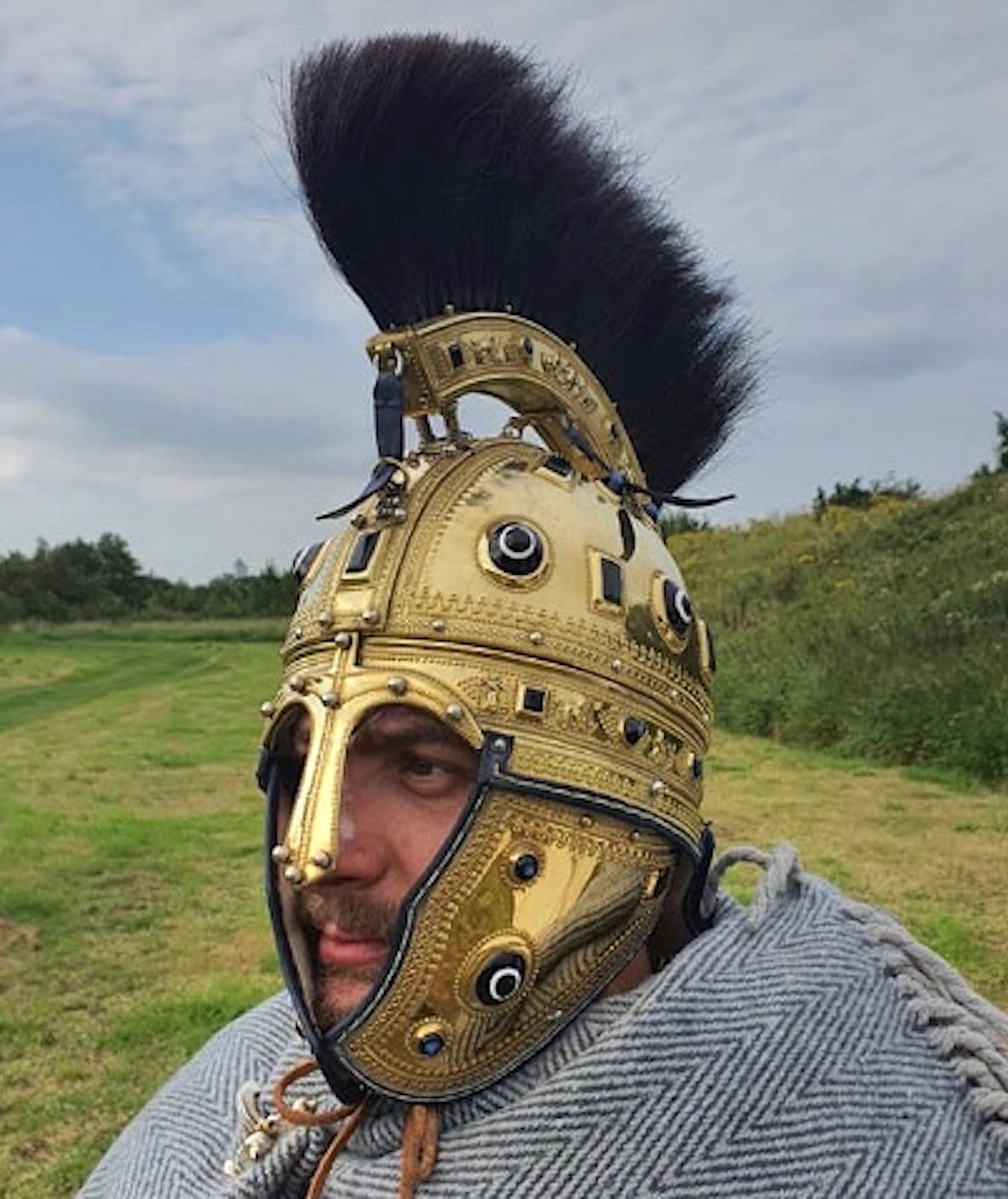
Reconstruction of Roman helmet produced by the Pustelak Brothers Workshop. Image from here: https://www.facebook.com/media/set/?set=a.1205528923131033&type=3&comment_id=1205538039796788
However, two other features of the plaza caught our eye, offering a different kind of conclusion to our Roman ruminations.
1. The Barbarian Struggle:
We found a powerful metal sculpture by Tar István titled Barbárok harca a rómaiakkal ("Barbarian Struggle with the Romans"). Originally designed as a fountain, it captures a mechanical, anonymous mob of Roman soldiers on foot and horseback. On the fringes, lunging figures attempt to escape the Roman orbit. It is abstract, heavy, and haunting.

Roman footsoldiers of the Barbárok harca a rómaiakkal.

A male figure stretches out from the mob on one side of the sculpture. A female figures reaches out from the other side.
2. The River in Stone:
Just before leaving, we noticed a scale model of the Danube’s course engraved directly into the pavers. Following the etching around trees and tourists gave us a fresh sense of the massive scale of the Roman frontier and the strategic placement of its forts.

Vicki stands on the barbarian side of the Blue Danube, her toes in “the water.” Opposite her is a representation of the major Roman camp where Budapest, Hungary, is located today.
The End of the Line
The Danubian Limes served the Empire from the mid-first century until its collapse in the fifth. While some forts were refashioned, most faded away by the seventh century. Given the vast distances and the constant threats, the sheer organizational will required to maintain this line for centuries is staggering.
Vicki and I spent that final afternoon lounging in the square, soaking in the sun. It marked the end of our "Romantic Danube" journey. As we walked back to the hotel, the historic river rolled on beside us—muddy, irresistible, and silent.
The Danube witnessed the rise and fall of empires; we were just two more travelers passing through its history.
*Contra-Aquincum is the best known name for Roman Budapest. Ptolemy, however, refers to it as Pession (Πέσσιον). Geography iii.7.§ 2.
**”March 15 Square” is named after the day in 1848 when the revolution against the Austrian Habsburgs began in Hungary.
Bible Land Explorer is adding a new adventure to our offerings. We will be hosting an African safari in 2023. Between July 27 and August 5 we will return to the big game parks in Tanzania, including the Serengeti, Ngorgorono Crater, and Tarangire. We will “jeep” and tent camp (or “glamp,” really!) in the Serengeti and follow the Great Migration of the wildebeest. It is one of the wonders of the natural world. This expedition is already half-full. If you are interested in signing on for a wild time, contact BibleLandExplorer@gmail.com.